

Perimenopause and menopause trigger hormonal decline that causes weight gain, fatigue, low libido, and metabolic slowdown in women. Age Well ATL’s physician-supervised women’s hormone therapy programs in Atlanta address all four through bioidentical hormone replacement therapy (BHRT), thyroid optimization, and sexual health treatment. Every plan starts with your own lab work, symptoms, and goals, and your physician adjusts the protocol as your body responds.
What hormonal changes do women experience during perimenopause and menopause, and why do symptoms begin so early?
Perimenopause and menopause cause estrogen, progesterone, and testosterone decline that drives weight gain, sleep disruption, mood changes, and metabolic slowdown. Perimenopause begins years before the final menstrual period, and these three hormones fluctuate most erratically during perimenopause.

Menopause marks a single point in time: twelve months after a woman’s final period. Perimenopause is the longer runway before that point, often lasting several years, and perimenopause is when most women first feel disruptive symptoms. Symptoms often start surprisingly early. According to a 2025 Contemporary OB/GYN report, more than half of women ages 30 to 35 already experience moderate to severe symptoms associated with menopause, yet most women do not seek treatment until decades later.
The symptom list is long because estrogen and progesterone affect many systems in the body, as a 2026 Stony Brook Medicine overview explains. The symptoms women report most often include:
- Vasomotor symptoms: hot flashes and night sweats
- Metabolic changes: weight gain, especially around the abdomen
- Sleep disruption: trouble falling asleep and frequent waking
- Cognitive and mood changes: brain fog, anxiety, and low mood
- Sexual health changes: low libido and vaginal dryness
Contemporary OB/GYN’s 2025 coverage also ties cycle irregularity, frequent urination, and heart palpitations to the perimenopausal transition. A 2025 NIH PubMed Central study of 387 perimenopausal women found that 70.54% had poor sleep quality, 58.9% had anxiety symptoms, and 68.7% had depressive symptoms.
Standard lab work frequently misses perimenopause. Hormone levels fluctuate daily, so a single blood draw can land inside the standard reference range even when a woman’s levels have fallen well below her personal baseline. Perimenopause stays undiagnosed for exactly this reason: the lab flags the result as normal while the woman feels anything but normal. Age Well ATL physicians measure hormone trends over time rather than isolated thresholds, comparing current results against symptoms and health history.
Estrogen decline also reshapes metabolism directly. Falling estrogen slows metabolic rate, increases insulin resistance, and shifts fat storage toward the abdomen, which makes maintaining a healthy weight harder even when diet and activity stay the same. Age Well ATL physicians evaluate hormonal shifts affecting women over 40 as part of a complete metabolic picture.
Self-diagnosis cannot separate hormone decline from thyroid disorders, anemia, or other conditions that mimic perimenopause. Physician evaluation is the necessary first step at Age Well ATL because only a clinician can interpret labs alongside symptoms, cycle history, and metabolic markers. Women in the greater Atlanta area can schedule a hormone evaluation at Age Well ATL to establish a personal baseline.
What is bioidentical hormone replacement therapy (BHRT) and how does Age Well ATL’s program work for women?
Bioidentical hormone replacement therapy (BHRT) uses hormones molecularly identical to the estrogen, progesterone, and testosterone the human body produces. Age Well ATL prescribes BHRT for women through physician-supervised protocols built on comprehensive hormone panel lab testing, individualized dosing, and scheduled follow-up labs that calibrate adjustments over time.

A 2011 review published through NIH PubMed Central describes BHRT as supplementation with hormones molecularly identical to those produced in the human body, unlike conventional synthetic therapies such as conjugated estrogens and medroxyprogesterone acetate. That molecular match distinguishes BHRT from synthetic conventional HRT. The distinction carries clinical weight. Empire Medical Training (2026) reports that synthetic medroxyprogesterone, the progestin used in conventional HRT and implicated in Women’s Health Initiative concerns, is associated with weight gain, anxiety, and depression, while micronized bioidentical progesterone is not associated with the same effects.
A complete female protocol balances three hormones together, because each hormone resolves a different part of the menopausal picture. Estrogen and progesterone relieve menopausal symptoms such as hot flashes, night sweats, and poor sleep. Low-dose testosterone supports energy, libido, and lean body composition. Here is the part many women never hear: BHRT does not replace the same hormone in all women equally, and low-dose testosterone is a routine component of female BHRT. Generalist providers routinely omit testosterone and prescribe only estrogen and progesterone, leaving a significant symptom gap in energy and libido. Testosterone dosing in female BHRT runs 10 to 20 times lower than dosing in men’s testosterone replacement therapy programs, a distinction that shapes both patient expectations and safety conversations.
Age Well ATL offers BHRT through three delivery methods, and each method has a different absorption profile and dosing schedule:
- Pellets: A clinician places a small pellet under the skin, and the pellet releases hormones steadily for typically 3 to 6 months per insertion, removing the daily application compliance issues associated with creams.
- Creams: Daily topical application absorbs through the skin and allows flexible dose changes, though steady hormone levels depend on consistent daily use.
- Injections: A scheduled injection delivers a measured dose with predictable absorption between appointments.
Age Well ATL bases BHRT protocols on comprehensive hormone panel lab testing before prescribing, not symptom-only assessment. The initial panel establishes baseline values for estrogen, progesterone, and testosterone, and the prescribing physician sets starting doses from those results. Patients enrolled in our women’s BHRT program return for follow-up labs at scheduled intervals, and each adjustment follows the new numbers rather than guesswork.
Physician supervision is required for safe BHRT prescribing because dosing must be calibrated to individual lab values and adjusted over time. Dosing errors produce real consequences: too little hormone brings symptoms back, and too much hormone creates adverse effects. Ongoing monitoring is built into the program from the first prescription, so every dose reflects current lab values.
How does thyroid function affect women’s hormonal symptoms and weight, and is it tested at Age Well ATL?
Thyroid dysfunction slows metabolism and produces symptoms that closely mirror estrogen decline, which makes thyroid dysfunction a hidden driver of weight gain in perimenopausal women. Age Well ATL tests thyroid markers within its comprehensive women’s hormone panel, so physicians identify and address both conditions together.

1. Hypothyroidism peaks during the perimenopausal years. Hypothyroidism occurs significantly more often in women than in men, and incidence climbs through the perimenopausal window. Thyroid dysfunction is a distinct but frequently overlapping condition in perimenopausal women that mimics and compounds hormonal symptoms.
2. Shared symptoms confound diagnosis. Fatigue, weight gain, cold sensitivity, brain fog, and mood changes appear in both hypothyroidism and estrogen decline, so one condition can easily mask the other. The good news: a single blood draw separates the two.
3. Subclinical cases slip past standard screening. Subclinical hypothyroidism, where TSH is technically within range but elevated within that range, is a frequent missed diagnosis in perimenopausal women. The comprehensive panel at Age Well ATL is designed to catch these borderline cases.
4. The metabolic impact is additive. Subclinical hypothyroidism and estrogen decline together impair metabolism more severely than either condition alone. A woman with both conditions will not resolve weight gain by treating only one, which is why integrated testing catches both simultaneously.
5. Treatment integrates thyroid and hormone care. Age Well ATL physicians build each patient’s plan around optimizing thyroid function for women’s metabolism, coordinating thyroid correction with bioidentical hormone therapy rather than treating the two in isolation.
How does Age Well ATL address women’s sexual health and low libido as part of hormone care?
Age Well ATL treats female sexual dysfunction as part of physician-supervised hormone care. Physicians evaluate low libido, vaginal dryness, and arousal difficulties during the women’s wellness evaluation, then address those symptoms through BHRT or through non-hormonal peptide therapy such as PT-141.

1. Evaluate sexual health inside the wellness workup. Physicians screen for desire, comfort, and arousal concerns during the same evaluation that reviews hormones and thyroid function, so sexual health is never siloed as a separate concern. The integrated care for women’s sexual wellness covers libido, vaginal comfort, and arousal within one clinical relationship.
2. Correct the hormonal causes with BHRT. Low testosterone in women contributes to reduced libido, low energy, and difficulty maintaining lean muscle mass, and a BHRT protocol restores testosterone toward healthy ranges. Estrogen decline causes vaginal dryness and discomfort during intimacy, and estrogen restoration within BHRT relieves both.
3. Offer PT-141 when hormone therapy does not fit. PT-141 is a non-hormonal peptide therapy that physicians prescribe and supervise for women who are not suited to hormone therapy or who have not started hormone therapy yet. Many patients find this reassuring. Sexual health treatment for women covers both hormonal causes and non-hormonal peptide options, so women who are not hormone therapy candidates still have a physician-supervised treatment path for low desire.
How does hormone therapy connect to weight loss for women at Age Well ATL?
Hormone therapy supports weight loss at Age Well ATL by correcting the estrogen and thyroid imbalances that make a woman’s body resist diet and exercise. Age Well ATL women’s hormone programs integrate BHRT, thyroid optimization, sexual health treatment, and weight management into a single physician-supervised plan.
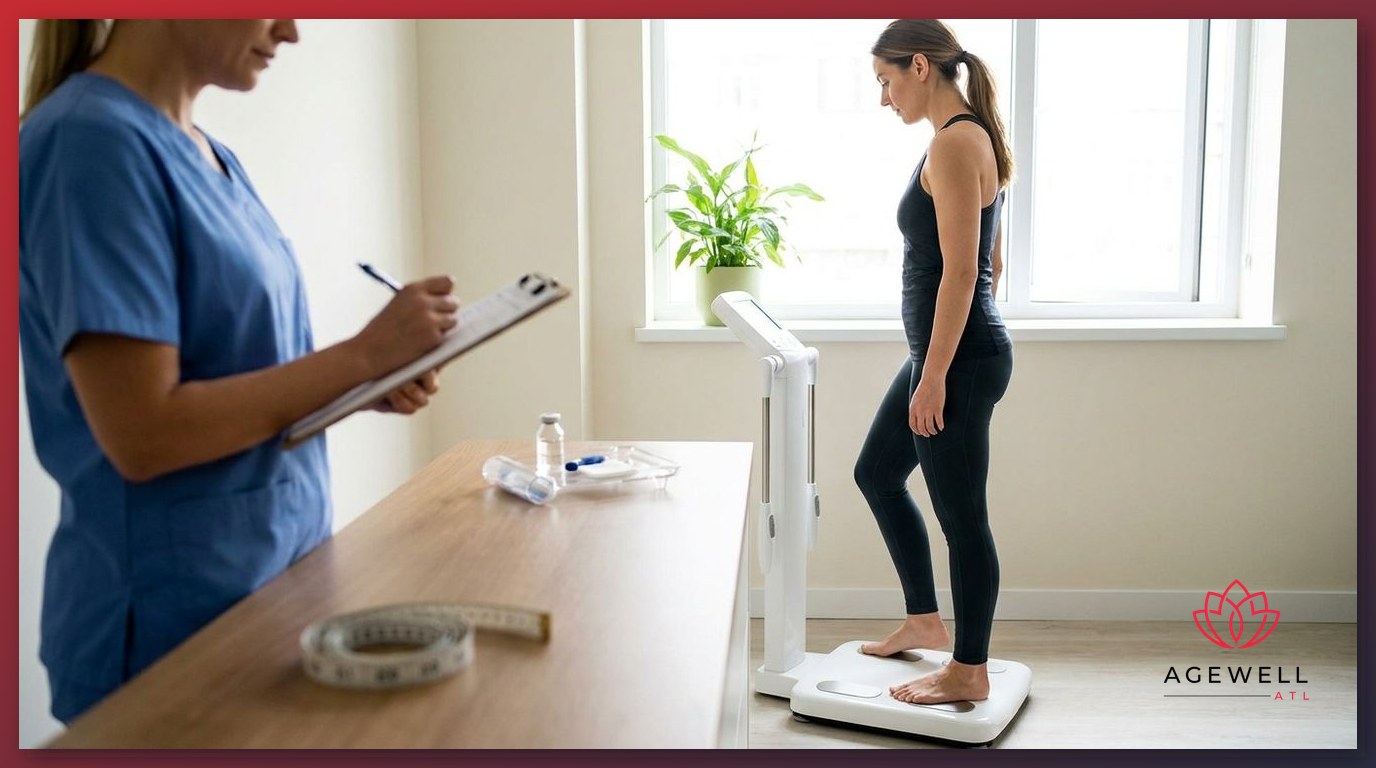
Hormonal decline is the reason effort stops working. According to NIH PubMed Central (2024), menopause increases body fat mass, particularly visceral fat, while metabolic function declines, contributing to insulin resistance and elevated cholesterol. Thyroid slowdown compounds the problem, because thyroid hormones regulate how efficiently the body burns calories at rest. Dieting alone cannot fully overcome that hormonal barrier.
The connection at Age Well ATL follows a clear clinical sequence:
1. Evaluate. The physician measures estrogen, thyroid function, and metabolic markers through lab testing, then identifies which imbalances are blocking progress. 2. Correct. BHRT and thyroid optimization restore hormonal balance as the foundation of the plan, never as a separate program running parallel to weight care. 3. Respond. With hormones stabilized, nutrition and activity changes produce results the body previously resisted. 4. Layer. When appropriate, the physician adds GLP-1 weight-loss therapy to that same plan. The GLP-1 Weight Loss Therapy Atlanta | Age Well ATL covers the clinic’s broader medical weight loss services, and the GLP-1 outcomes tailored to women’s physiology explains how GLP-1 receptor agonist programs adapt to female hormonal patterns.
Women who optimize hormones first often respond better to every intervention that follows. A meta-analysis from The Menopause Society covering 17 randomized controlled trials and more than 29,000 participants found that hormone therapy significantly reduced insulin resistance in healthy postmenopausal women, which helps explain why hormone correction makes subsequent weight management more effective.
Who is a candidate for women’s hormone therapy at Age Well ATL, and how do you get started?
Candidates for women’s hormone therapy at Age Well ATL include women in perimenopause or menopause with symptoms affecting quality of life, energy, weight, sleep, mood, or sexual health, and younger women with documented hormone imbalance, thyroid dysfunction, or sexual health concerns.

Many women never suspect hormones at all. According to a 2025 NIH PubMed Central review, women often do not recognize perimenopause as a cause of their mental health symptoms, and general practitioners acknowledge gaps in training for identifying perimenopausal symptoms. Candidacy for women’s hormone therapy Atlanta therefore rests on lab confirmation rather than age or guesswork.
Getting started follows three steps. A physician conducts an initial consultation, orders a comprehensive lab panel, and builds an individualized treatment plan from those results. Age Well ATL does not use one-size-fits-all protocols, so BHRT dosing, thyroid support, and sexual health treatment reflect each patient’s own labs and history. Women who have had a hysterectomy may have different progesterone considerations, and the physician sets the protocol accordingly during evaluation.
Age Well ATL serves women across the greater Atlanta metro from the Smyrna, Georgia clinic. The Atlanta weight loss and wellness practice pairs hormone care with physician-supervised weight management when symptoms overlap. The male hormone optimization services Atlanta covers the same physician-led approach for men. Women ready to begin can schedule a consultation at the Smyrna clinic.
Sources
- Contemporary OB/GYN, “Study: Perimenopause symptoms common in women as young as 30” (2025)
- NIH PubMed Central, “Investigation of the quality of life and influencing factors among perimenopausal women” (2025)
- Stony Brook Medicine, “What Age Does Perimenopause Start? What Women Should Know About the Signs and When to Seek Help” (2026)
- NIH PubMed Central, “Mental health consultations during the perimenopausal age range: a qualitative study of GP and patient experiences” (2025)
- NIH PubMed Central, “Effect of Postmenopausal Hormone Therapy on Metabolic Syndrome and Its Components” (2024)
- NIH PubMed Central, “Detrimental Changes in Health during Menopause” (2023)
- The Menopause Society, “New Meta-Analysis Shows That Hormone Therapy Can Significantly Reduce Insulin Resistance” (2024)
- NIH PubMed Central, “Effectiveness of Compounded Bioidentical Hormone Replacement Therapy: An Observational Cohort Study” (2011)
- Empire Medical Training, “Bioidentical Hormone Replacement Therapy (BHRT): The Complete Clinical Guide” (2026)