
Peptide therapy continues to grow as a key approach in modern medicine, but its success depends on more than just the peptides themselves. Clinic technology plays a direct role in improving treatment accuracy, safety, and outcomes. By using advanced tools for formulation, delivery, and monitoring, we can ensure that each therapy performs as intended.

As technology evolves, clinics gain stronger capabilities to personalize care and track progress in real time. These improvements help us understand how peptides work in the body and how to make therapies more effective. Exploring these innovations shows how technology shapes both the science and practice of peptide therapy.
Clinic Technology as a Catalyst for Peptide Therapy Success
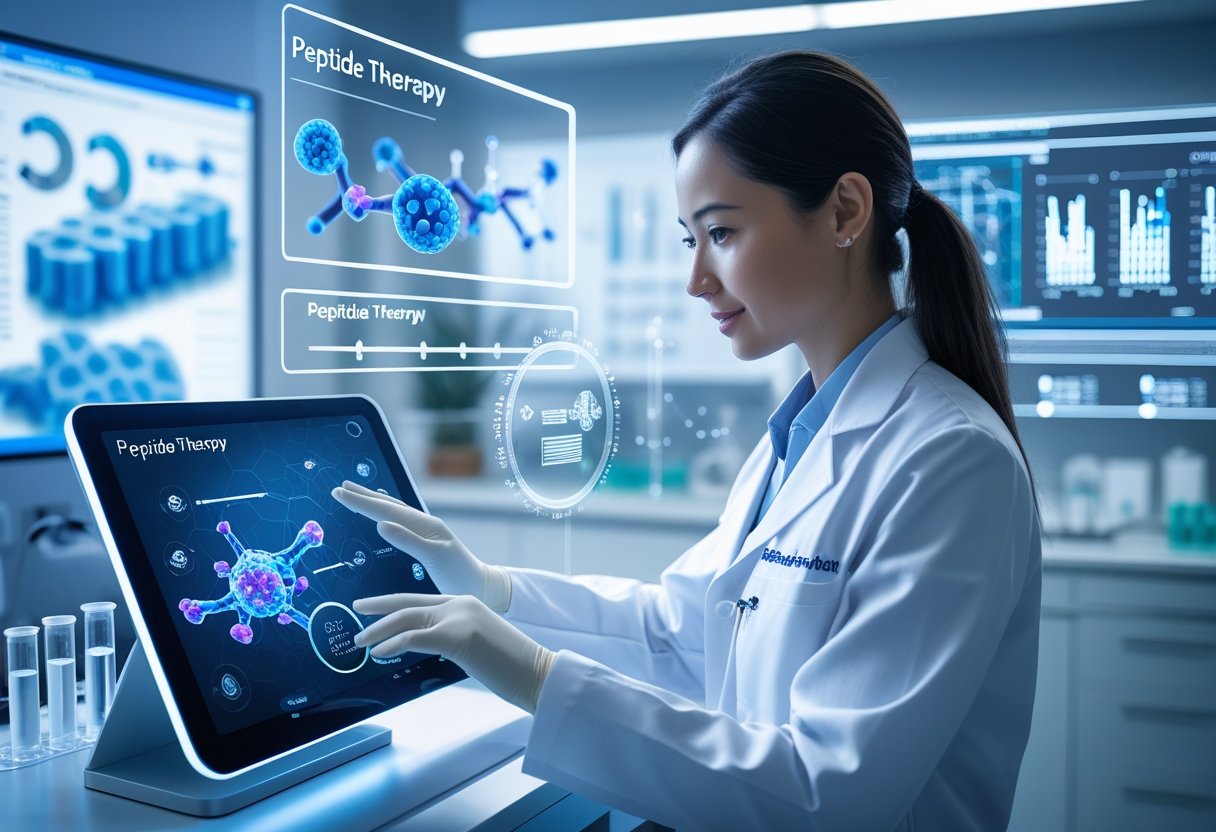
We use advanced clinic technology to improve how we design, monitor, and adjust peptide therapy. These tools help us collect accurate data, identify treatment patterns, and create personalized care plans that lead to better patient outcomes.
Integration of Digital Health Tools in Peptide Therapy
Digital health tools make peptide therapy more efficient and precise. Electronic health records (EHRs) store patient data securely and allow clinicians to track progress over time. Wearable devices measure real-time metrics like heart rate, sleep, and activity, giving us continuous insight into how patients respond to treatment.
We also use mobile health apps to improve communication and support adherence. These apps remind patients to take doses, log symptoms, and report side effects. This data helps us adjust therapy quickly when needed.
| Tool Type | Primary Function | Benefit to Therapy |
|---|---|---|
| EHR Systems | Store and track medical data | Improves coordination |
| Wearables | Monitor real-time health metrics | Enables early detection |
| Mobile Apps | Support communication and reminders | Increases adherence |
By combining these technologies, we reduce errors, improve patient engagement, and make data-driven decisions that strengthen therapy outcomes.
Role of Artificial Intelligence and Machine Learning
Artificial intelligence (AI) and machine learning (ML) give us tools to analyze complex biological and clinical data. These systems identify relationships between peptides, biomarkers, and patient responses that humans might miss. This helps us predict treatment success and detect issues early.
We use convolutional neural networks (CNNs) to analyze imaging data and recurrent neural networks (RNNs) or long short-term memory (LSTM) models to process time-based patient data. Variational autoencoders (VAEs) and generative adversarial networks (GANs) help generate and test new peptide structures efficiently.
AI-driven insights allow us to simulate how peptides interact with receptors before trials. This speeds up research and reduces costs. By applying these models, we can create more effective and safer peptide therapies.
Personalized Medicine Approaches Enabled by Technology
Technology allows us to tailor peptide therapy to each individual. We analyze genetic, metabolic, and lifestyle data to design personalized treatment plans. This approach increases the chance of success and reduces unwanted side effects.
Machine learning models process large datasets to find patterns that guide therapy adjustments. For example, if a patient’s genetic profile suggests slower peptide absorption, we can modify dosage or delivery methods. This ensures that therapy remains effective over time.
Key benefits of personalized technology-driven therapy include:
- Better prediction of treatment response
- Faster identification of optimal peptide combinations
- Reduced trial-and-error in dosing
By using these tools, we make peptide therapy more precise, responsive, and aligned with each patient’s unique biology.
Advances in Peptide Drug Development and Delivery
We continue to see major progress in how therapeutic peptides are made and delivered. Improvements in synthesis, delivery vehicles, and formulation design now help us increase stability, control dosage, and improve how these drugs reach target tissues.
Solid-Phase Peptide Synthesis and Automation
Solid-phase peptide synthesis (SPPS) remains the foundation for producing peptides with high purity and precision. Using this method, we attach amino acids step by step to a solid resin, which allows easy washing and reaction control. Automation has made this process faster and more consistent.
Modern peptide synthesizers can handle multiple sequences at once, reducing errors and waste. This efficiency supports the production of complex therapeutic peptides used in research and clinical settings.
We often rely on automated SPPS systems to optimize reaction times and reagent use. By integrating sensors and software controls, we can monitor coupling efficiency and adjust conditions in real time. These advances lower production costs and improve reproducibility, which is essential for large-scale manufacturing.
Innovative Drug Delivery Systems
Peptides degrade quickly in the body, so delivery systems must protect them from enzymes and improve absorption. Traditional parenteral administration, such as subcutaneous injection, remains common because it avoids digestion-related breakdown.
However, new drug delivery vehicles aim to make oral peptide formulations more practical. Lipid nanoparticles, polymeric carriers, and microneedle patches are being tested to improve membrane permeability and control release rates.
We also use polyethylene glycol (PEG) modification, or PEGylation, to extend circulation time and reduce immune recognition. These delivery innovations help maintain stable peptide levels in the bloodstream and make treatment more convenient for patients.
| Delivery Method | Key Advantage | Common Challenge |
|---|---|---|
| Subcutaneous Injection | Reliable absorption | Invasive |
| Oral Formulation | Patient convenience | Low bioavailability |
| PEGylation | Longer half-life | Complex synthesis |
Enhancing Bioavailability and Stability
Peptides face rapid enzymatic degradation from peptidases, which limits their oral bioavailability. To address this, we modify peptide structures to resist breakdown and improve metabolic stability.
Chemical strategies include substituting D-amino acids, adding protective groups, or cyclizing the peptide chain. These changes reduce peptide degradation and extend the drug’s half-life.
We also explore formulation techniques that shield peptides from harsh environments. Encapsulation in nanoparticles or liposomes protects against enzymes and improves cellular permeability.
By combining structural modification with smart formulation design, we can enhance peptide stability and ensure that therapeutic peptides reach their intended targets effectively.
Clinical Applications and Therapeutic Impact
We use peptide-based drugs to target specific biological pathways that influence chronic disease control, immune defense, and brain function. These therapies improve treatment precision, reduce side effects, and expand options for conditions that respond poorly to traditional pharmaceuticals.
Peptide Therapies for Chronic and Metabolic Diseases
Peptide therapeutics play a major role in managing type 2 diabetes mellitus and obesity. Drugs that act as GLP-1 receptor agonists, such as GLP-1 and GLP-2, liraglutide, exenatide, albiglutide, dulaglutide, lixisenatide, and GLP-1 and GLP-2, mimic the natural hormone glucagon-like peptide-1 (GLP-1).
These drugs help regulate blood sugar, slow gastric emptying, and promote satiety. By improving insulin secretion and reducing appetite, they lower the risk of cardiovascular complications linked to metabolic disorders.
We also see peptide therapies used in chronic diseases beyond diabetes, such as lipid metabolism disorders and nonalcoholic fatty liver disease. Their targeted action and favorable safety profile make them a growing part of the pharmaceutical market for long-term disease management.
| Example Drug | Primary Use | Key Benefit |
|---|---|---|
| GLP-1 and GLP-2 | Type 2 Diabetes, Obesity | Improves glycemic control, supports weight loss |
| Liraglutide | Type 2 Diabetes | Reduces appetite, lowers A1C |
| GLP-1 and GLP-2 | Type 2 Diabetes | Dual action on GLP-1 and GIP receptors |
Oncology and Infectious Disease Applications
In cancer therapy, peptide-based drugs help deliver cytotoxic agents directly to tumor cells, reducing harm to healthy tissue. Some peptides act as growth factor inhibitors, blocking pathways that tumors use to grow and spread.
Antimicrobial peptides (AMPs) are another key focus. They disrupt bacterial membranes and help overcome antibiotic resistance, which remains a major global health challenge. AMPs show promise against infectious diseases caused by resistant bacteria and viruses.
We also see research into peptide vaccines that train the immune system to recognize tumor or pathogen-specific antigens. This approach supports both oncology and infectious disease treatment by enhancing immune precision and durability of response.
Neurological and Cognitive Disorders
Peptide therapeutics influence the central nervous system by modulating neurotransmitters and growth factors. These effects support treatments for Alzheimer’s disease, Parkinson’s disease, and other disorders that impair memory, attention, and cognition.
Some peptides regulate the hypothalamic-pituitary-adrenal axis, which helps manage stress responses and mood stability. Others aim to protect neurons from oxidative damage or improve synaptic signaling.
We continue to explore peptide-based drugs that restore normal signaling in degenerative brain conditions. Their ability to cross biological barriers and act selectively makes them valuable tools for developing safer and more effective neurological therapies.
Future Directions and Challenges in Clinic Technology for Peptide Therapy
We continue to see progress in how clinics use technology to improve peptide therapy. Advances in discovery tools, clinical integration, and sustainable practices are shaping safer and more effective treatments.
Emerging Technologies and Display Platforms
New display technologies like mRNA display, phage display, and ribosome display help us identify peptides with higher potency and improved bioavailability. These methods allow screening of large peptide libraries that target specific receptors or enzymes.
We also use genetic code expansion and flexizymes to introduce non-natural amino acids. This expands chemical diversity and can improve drug conjugate stability, including peptide-drug conjugates (PDCs) that combine peptide targeting with small-molecule activity.
Proteomics tools now map peptide interactions inside cells, helping us predict off-target effects and optimize pharmacokinetics (PK). By linking this data with quantitative structure-activity relationship (QSAR) models, we can better predict how modifications affect clearance, blood-brain barrier (BBB) penetration, and renal clearance.
| Technology | Main Use | Key Benefit |
|---|---|---|
| mRNA Display | Peptide discovery | Fast screening of large libraries |
| Flexizymes | Peptide synthesis | Expanded amino acid diversity |
| Proteomics | Target analysis | Better potency prediction |
These innovations shorten drug discovery timelines and support more precise drug development strategies.
Overcoming Barriers to Clinical Adoption
Despite progress, we face challenges in bringing peptide technologies into clinics. Many peptides degrade quickly due to enzymatic reactions, reducing half-life and bioavailability. We address this through chemical modifications, encapsulation, or conjugation with biologics and small molecules.
Another barrier is the complexity of manufacturing under clinical-grade conditions. Automation and standardized biotechnology platforms can improve reproducibility and reduce costs.
Regulatory approval also depends on consistent clinical trial results. We must design trials that measure not only efficacy but also PK, safety, and long-term outcomes. Collaboration between researchers, clinicians, and regulators helps align data standards and accelerate review.
We continue to refine display platforms and analytical tools to make clinical translation faster and more reliable.
Sustainability and Regulatory Considerations
As peptide therapy expands, sustainability becomes a key factor in technology design. We aim to lower waste from synthesis reactions and reduce reliance on rare reagents. Using renewable feedstocks and greener solvents supports cleaner biotechnology operations.
Regulatory frameworks now emphasize environmental impact and supply chain transparency. Clinics must track material sources and disposal practices, especially for complex drug conjugates and biologics.
We also face stricter rules on data integrity and patient safety. Digital systems for monitoring clinical trials and post-market performance help maintain compliance.
By balancing innovation with sustainability and regulation, we can build clinic technologies that support long-term, responsible growth in peptide therapy.

Dr. Cassandra B. Donnelly is a highly experienced physician with over 30 years in the medical field, specializing in emergency medicine and Osteopathic Medicine. She earned her Doctor of Osteopathic Medicine from Rowan University’s School of Osteopathic Medicine and completed her Emergency Medicine residency at Rutgers New Jersey Medical School, building a profound understanding of critical care and patient management. Dr. Donnelly’s expertise has been recognized in significant medical literature, with her contributions featured in the National Library of Medicine. Her professional commitment extends to providing comprehensive patient care and contributing valuable insights to the medical community. Dr. Donnelly is dedicated to delivering accurate, reliable, and expertly reviewed content that meets the highest standards of medical knowledge.