
Regenerative medicine continues to evolve as we search for better ways to repair and restore the body. Among the new tools gaining attention are thymosin peptides, small proteins that support healing and immune balance. By integrating thymosin peptides into regenerative treatments, we can enhance tissue repair and improve recovery outcomes in a controlled and targeted way.
We explore how these peptides influence cell growth, inflammation, and immune response to help guide safer and more effective therapies. Our focus includes understanding their biological roles, potential clinical uses, and how their pharmacokinetics shape treatment design. Together, these insights show how thymosin peptides may become a valuable part of modern regenerative medicine.
Role of Thymosin Peptides in Regenerative Medicine
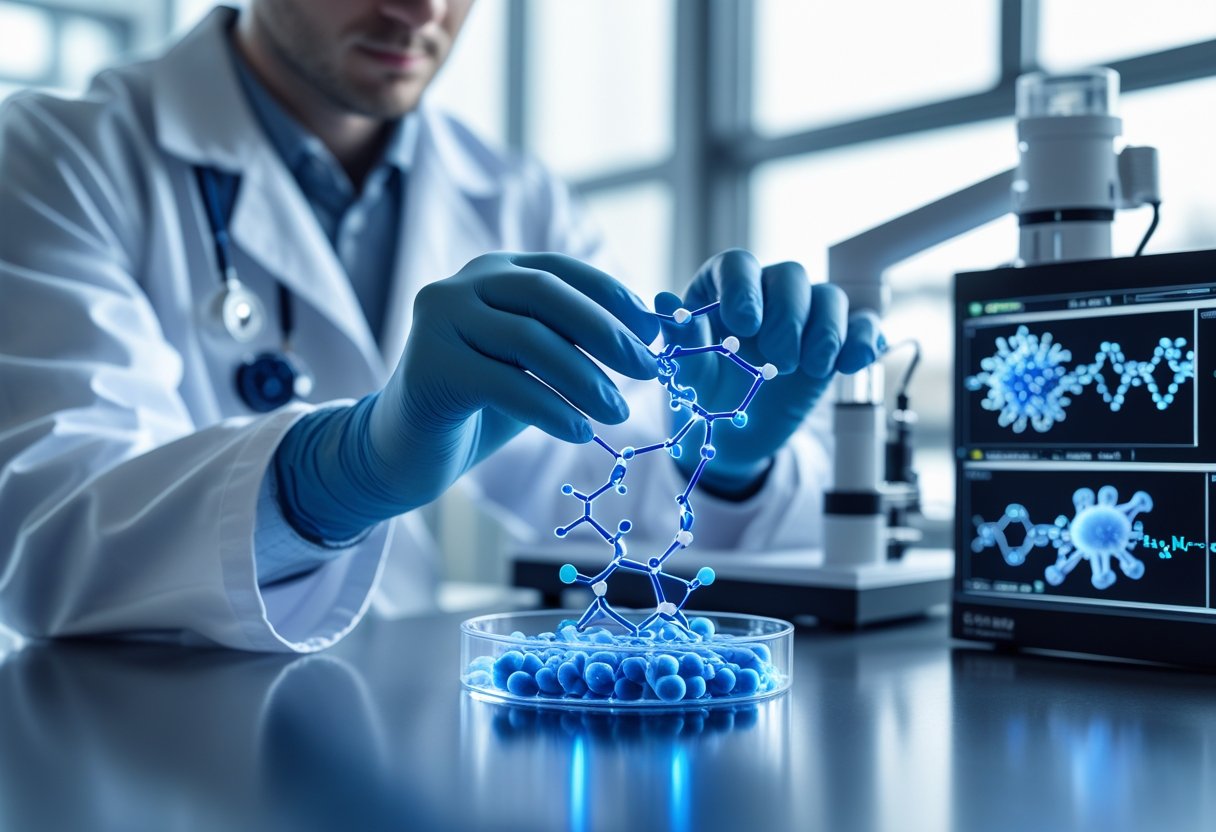
Thymosin peptides support healing by influencing cell migration, tissue remodeling, and immune balance. We study them to improve recovery after injury and enhance the body’s natural repair processes through targeted biological actions.
Mechanisms of Action in Tissue Repair
Thymosin peptides act on several cellular pathways that promote repair. They help cells migrate to damaged areas, increase angiogenesis (formation of new blood vessels), and regulate inflammation to prevent excessive tissue damage.
We find that thymosin β4 interacts with actin, a protein that shapes cell structure and movement. This interaction allows cells to reorganize and close wounds faster. It also supports the formation of new extracellular matrix, which provides a scaffold for tissue regeneration.
In controlled studies, thymosin peptides have been shown to stimulate progenitor cells, which are early-stage cells that can develop into specialized tissue. By guiding these cells to sites of injury, thymosin peptides help restore normal tissue architecture.
| Function | Effect on Repair |
|---|---|
| Cell migration | Faster wound closure |
| Angiogenesis | Improved blood supply |
| Inflammation control | Reduced scarring |
Thymosin β4 and Its Biological Functions
Thymosin β4 is one of the most studied thymus-derived peptides. We recognize it for its ability to regulate cell survival, motility, and differentiation. It binds to actin monomers, keeping them available for rapid structural changes during healing.
This peptide also influences gene expression linked to tissue growth and reduces oxidative stress in damaged cells. In skin and heart tissue models, thymosin β4 enhances both epithelial migration and cardiac muscle repair.
We also note its role in reducing fibrosis, which limits excessive scar formation. By restoring balance between collagen production and degradation, thymosin β4 helps tissues heal with better function and structure.
Thymus-Derived Peptides and Immune Modulation
Thymus-derived peptides, including thymosin β4 and thymosin α1, help regulate immune activity during regeneration. They promote a balanced immune response that supports healing without triggering chronic inflammation.
We observe that these peptides enhance T-cell maturation and cytokine regulation, which are essential for coordinated repair. They also help clear damaged cells and pathogens from the wound site.
Through immune modulation, thymus-derived peptides create a favorable environment for tissue regeneration. This balanced response allows new cells to integrate effectively, reducing complications and improving recovery outcomes.
Therapeutic Applications of Thymosin Peptides

We use thymosin peptides to support tissue repair, regulate inflammation, and improve cell recovery in several clinical areas. These peptides influence heart healing, stem cell activity, and neural protection through specific molecular pathways.
Myocardial Infarction and Cardiac Regeneration
Thymosin beta-4 (Tβ4) helps restore heart tissue after a myocardial infarction. It promotes angiogenesis, or the growth of new blood vessels, which improves oxygen delivery to damaged areas.
We find that Tβ4 also supports cardiac progenitor cell migration and survival. This effect helps form new muscle tissue and reduces scar formation.
| Effect | Mechanism | Outcome |
|---|---|---|
| Angiogenesis | Upregulation of VEGF | Improved blood flow |
| Anti-fibrosis | Modulation of actin pathways | Reduced scarring |
| Cell survival | Activation of integrin-linked kinase | Enhanced tissue repair |
When combined with standard treatments, thymosin-based therapy may improve heart function and limit long-term damage.
Stem Cells and Cell Differentiation Enhancement
Thymosin peptides influence stem cell activity by guiding cell differentiation and promoting survival under stress. Tβ4 and thymosin alpha-1 (Tα1) both enhance stem cell migration toward injury sites.
We observe that these peptides regulate genes linked to cytoskeletal organization and cell adhesion. This helps stem cells integrate more effectively into damaged tissues.
Key actions include:
- Increasing differentiation into cardiac, neural, and epithelial cells
- Reducing oxidative stress to maintain stem cell viability
- Improving signaling through pathways like PI3K/Akt and MAPK
These effects make thymosin peptides useful in regenerative therapies that rely on stem cell transplantation or endogenous repair.
Neuroinflammation and ALS Management
In amyotrophic lateral sclerosis (ALS), chronic neuroinflammation contributes to neuron loss. Thymosin alpha-1 helps regulate immune responses by reducing pro-inflammatory cytokines such as TNF-α and IL-6.
We use Tα1 to enhance microglial balance, shifting them from a damaging to a protective state. This modulation may slow disease progression and preserve motor neuron function.
Studies also suggest that thymosin peptides support neural cell survival by stabilizing mitochondrial activity and reducing oxidative damage. These combined effects provide a promising approach for managing inflammation-related neurodegeneration.
Pharmacokinetics and Clinical Considerations
We examine how thymosin peptides move through the body and how their safety and effectiveness shape clinical use. We focus on measurable factors such as absorption, tissue distribution, and observed outcomes in regenerative treatments.
Distribution and Metabolism
After administration, thymosin peptides distribute quickly through the bloodstream. They show strong affinity for tissues involved in repair, such as muscle, skin, and immune organs. We find that smaller peptides like thymosin beta-4 (Tβ4) cross cell membranes more easily due to their low molecular weight.
Their metabolism occurs mainly through enzymatic degradation in the liver and kidneys. Clearance rates vary depending on dose and route of delivery. For example, subcutaneous injection results in slower clearance compared to intravenous routes.
| Route | Absorption Rate | Primary Clearance | Approx. Half-Life |
|---|---|---|---|
| Intravenous | Rapid | Renal | 1-2 hours |
| Subcutaneous | Moderate | Hepatic/Renal | 3-6 hours |
We observe that peptide stability depends on formulation. Using sustained-release carriers or peptide analogs can extend half-life and improve tissue exposure. These factors guide dosing schedules and help maintain therapeutic levels without frequent administration.
Safety and Efficacy Profiles
Clinical studies report that thymosin peptides are well tolerated at therapeutic doses. Most side effects are mild, such as local irritation or fatigue. We rarely see severe reactions when dosing follows established safety guidelines.
Efficacy depends on treatment context. In wound healing and cardiac repair, controlled trials show improved tissue regeneration and reduced inflammation. However, outcomes vary with patient age, underlying disease, and concurrent therapies.
We monitor immune modulation closely, since thymosins influence cytokine production and T-cell activity. Regular lab assessments help detect unwanted immune responses early.
| Parameter | Typical Observation |
|---|---|
| Adverse Events | Mild, transient |
| Immune Response | Balanced or slightly enhanced |
| Long-Term Safety | Favorable in monitored use |
We continue to refine dosing strategies and patient selection to maximize benefit while minimizing risk.

Dr. Cassandra B. Donnelly is a highly experienced physician with over 30 years in the medical field, specializing in emergency medicine and Osteopathic Medicine. She earned her Doctor of Osteopathic Medicine from Rowan University’s School of Osteopathic Medicine and completed her Emergency Medicine residency at Rutgers New Jersey Medical School, building a profound understanding of critical care and patient management. Dr. Donnelly’s expertise has been recognized in significant medical literature, with her contributions featured in the National Library of Medicine. Her professional commitment extends to providing comprehensive patient care and contributing valuable insights to the medical community. Dr. Donnelly is dedicated to delivering accurate, reliable, and expertly reviewed content that meets the highest standards of medical knowledge.